
Our recent GDN webinar on women leaders in the digital and AI space left me reflecting on a question that extends well beyond technology:
What does it really mean for women to lead in a world in which technology is reshaping organisations, work and opportunity?
The timing of our conversation was particularly meaningful. In South Africa, August is Women’s Month, and 2026 marks 70 years since more than 20,000 women marched to the Union Buildings on 9 August 1956 to protest against the extension of apartheid pass laws to women. Seventy years hence we ask: What barriers remain, and what responsibility do those of us who now occupy positions of influence have to change them?
During the webinar, I spoke about the three interconnected levels at which much of my own work takes place: the individual leader, the organisation, and the wider ecosystem.
Each level presents different challenges.
- At the individual level, women continue to navigate questions of confidence, visibility, influence and opportunity.
- At organisational level, we encounter cultures, leadership structures and established ways of working that can either enable women to progress — or quietly constrain them.
- And at ecosystem level, the questions become larger still: Who designs the systems? Who determines the rules? Whose knowledge and experience are recognised? And who has a voice when decisions about our digital future are made?
This became particularly relevant when I was asked to elaborate on the Digital Credential Exchange (DCX) initiative in South Africa.
The DCX is exploring how we might create a trusted ecosystem through which different forms of learning and capability can be recognised and verified — including formal qualifications, workplace learning, skills and other forms of learning acquired throughout people’s lives.
While technology is an important enabler, we have discovered that the difficult questions are seldom technological. They are questions of trust, governance, recognition, power and participation.
Who gets to determine what counts as credible learning? How do employers, education institutions and other stakeholders trust information generated elsewhere? How do we ensure that people who have acquired valuable skills outside traditional pathways are not invisible to the system? And importantly, who is represented when these new systems are designed? These questions are not unique to South Africa. We learnt that these were common challenges to many parts of the world such as Canada, Australia, the UK and others.
The leadership paradox
South Africa offers an interesting paradox. We have strong constitutional commitments to equality and a substantial legislative framework promoting employment equity. More recently, amendments to the Employment Equity Act introduced sectoral numerical targets intended to accelerate equitable representation at different occupational levels. Yet legislation alone does not remove the invisible barriers women experience.
Women are increasingly visible in professional and management roles, yet progression to the highest levels of organisational leadership remains much slower. This is the familiar glass ceiling, but it is worth asking what that ceiling actually looks like in everyday organisational life.
Sometimes it is obvious discrimination. More often, it is subtler. It is the woman whose expertise is welcomed, but whose authority is questioned. The woman invited into the boardroom, but not necessarily into the informal networks where influence is built. The highly capable manager who continues to be developed while someone else is considered “ready”. Or the woman who finally reaches the leadership table only to discover that having a seat and having a voice are not necessarily the same thing.
From representation to influence
As AI and digital technologies increasingly influence recruitment, education, credentialing, workforce planning and organisational decision-making, we need to think about women’s leadership differently.
We know what it feels like to be the only woman in the room. We know something about the self-doubt that can accompany entering spaces in which few people look or sound like us. We know that access to an opportunity, a challenging assignment, an introduction or simply having someone advocate for us at the right moment can alter a career trajectory.
So perhaps leadership carries an additional responsibility: not simply to occupy the space we have earned, but to make that space more accessible to others. That does not mean lowering standards or advancing women simply because they are women. It means examining whether the standards, opportunities and pathways are genuinely fair.
It means mentioning a capable woman’s name when she is not in the room. It means opening networks that have traditionally been difficult to enter. It means giving someone the stretch assignment before she has convinced herself that she is 100 per cent ready. It means listening when a younger woman describes an organisational experience that some of us may have learned simply to tolerate.
And perhaps most importantly, it means asking ourselves:
What should the next generation of women leaders never have to experience simply because we did? What barriers can we remove for future generations? Perhaps this was my biggest takeaway from our GDN conversation. My experience working across leadership, organisations and ecosystems has shown me that sustainable transformation requires all three. We need women who have the confidence and opportunity to lead. We need organisations willing to examine the structures and cultures that determine whose leadership progresses. We need women already in positions of influence who are prepared to open doors, challenge assumptions and create opportunities for those coming behind them.
We need women at the ecosystem level, shaping standards, governance, technology, policy and the new infrastructures through which people will access learning, work and opportunity. The DCX journey continues to remind me that building technology is often the easier part. Building trust, inclusion and shared ownership is harder.
About the Author
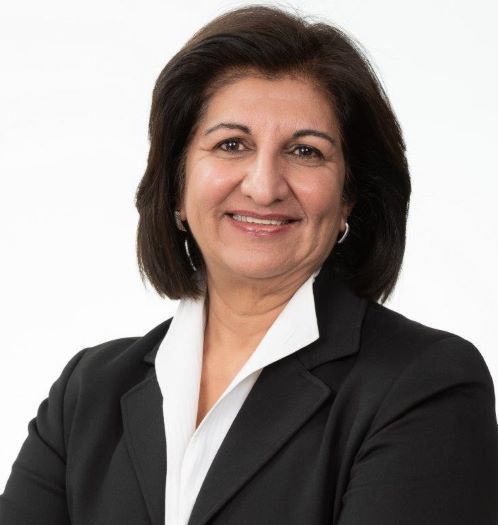
Dr. Rooksana Rajab
This blog post represents the opinions of the author. The Groningen Declaration network assumes no responsibility or liability for the content or accuracy of this post.
Join the Learner and Citizen Mobility Community
Collaborate with leading international organizations and thought leaders shaping the ethical, standards-based future of secure student and worker data portability.