
There is a particular kind of magic in a room full of strangers who have spent years working on the same quiet, unglamorous problem: how do we make sure a person’s learning is recognised, wherever in the world they carry it? That is the question that will bring more than a hundred organisations to Cape Town this October, when the Groningen Declaration Network (GDN) holds its 15th Annual Meeting at the Cape Town International Convention Centre 2 (CTICC2), co-hosted with the South African Qualifications Authority (SAQA). When delegates gather this time, the network of networks will be shaped as much by the continent hosting it as by the systems on the agenda. It feels fitting, because this will not be the first time Cape Town has hosted this conversation. It will be the second.
A city that has done this before
Ten years ago, Cape Town hosted the GDN’s 5th Annual Meeting at the UCT School of Business, a gathering that coincided, deliberately, with SAQA’s own 20th anniversary. I wrote about that week in an earlier piece for this site, drawing on interviews recorded in May 2016. Revisiting it now feels less like nostalgia than like checking a set of predictions against the record.
In 2016, the GDN’s then-President, Victoriano Giralt, and its then-Executive Secretary, Herman de Leeuw, described a vision that sounded, at the time, almost speculative: a world where students carried their own verified academic data digitally, tamper-proof and permanently theirs to share, an idea de Leeuw memorably nicknamed “EduCoin” — the Bitcoin logic applied to a transcript. SAQA’s then-Deputy CEO, Dr Julie Reddy, used that same week to mark two decades of building South Africa’s National Qualifications Framework from scratch, including a National Learner Record Database (NLRD) that by then held close to 17 million learner records. Giralt put South Africa’s position plainly: “in the middle of coming fast… one of the first of the class.”
A decade on, that “EduCoin” instinct has grown into exactly the kind of infrastructure this year’s programme takes for granted — no longer a Bitcoin analogy on a panel, but India’s DigiLocker, now issuing into more than 3,000 higher education institutions and holding upward of 500 million verified documents, which I’ll come back to shortly. What was spoken aloud as ambition in a UCT lecture hall in 2016 is, this October, a working session on the agenda.
A theme that means more than a slogan
This year’s rallying call is simple and, in its own way, quietly radical: “Help Create a Network of Networks.“ It sounds like conference-speak until you sit with it. The GDN was built on the idea that no single country, agency, or platform can solve credential recognition alone. A nursing qualification earned in Manila needs to mean something in Toronto. A microcredential from a township training centre in Gauteng needs to be legible to an employer in Rotterdam. That only happens if the many separate systems of the world learn to talk to one another, without any one of them being forced to disappear — the same logic Cape Town was already circling a decade ago, just planet-sized now.
What makes this Cape Town meeting different from 2016 is where that conversation is now being held on purpose. Before the Annual Meeting even opens, delegates are invited to a pre-conference gathering on October 19th titled “Decolonizing Recognition: Ubuntu — Stronger Together,” hosted at the Cape Peninsula University of Technology (CPUT). Ubuntu, the Southern African philosophy often translated as “I am because we are,” is not a decorative theme here. It is a genuine challenge to a field that has, for decades, treated Western institutional credentials as the default currency of trust. In 2016, South Africa was praised as an eager, fast-moving adopter of a system designed elsewhere. In 2026, with SAQA as co-host and Ubuntu as the framing philosophy of the entire gathering, South Africa is helping author the system itself.
Three days, roughly a hundred conversations
It helps to know the shape of the thing. The Annual Meeting proper opens on October 20th with a traditional drumming ceremony and a welcome from South Africa’s Minister of Higher Education and Training — a deliberate signal, before a single slide is shown, of whose ground this conversation is standing on. From there, delegates move through three packed days of plenaries, concurrent sessions, and roundtables spread across rooms with names like Hall 8, Daisy, Freesia, and Orchid, punctuated by the kind of hallway conversations and coffee-break introductions that conferences are secretly designed for.
Day one leans into the plumbing. Sessions run in parallel on how U.S. credential evaluation has evolved from a centralised admissions gatekeeping function into a decentralised recognition system; on Australia’s use of AI-enabled document checks to speed up skills assessment, tested through a live case study with Cambodia; and on SAQA’s own production-stage work with Credential Engine to publish South Africa’s National Qualifications Framework using the Credential Transparency Description Language (CTDL) — quiet infrastructure work that, if it succeeds, will make South African qualifications legible to systems on the other side of the planet. The day closes with a panel unpacking two years of progress on the African Continental Qualifications Framework (ACQF), the pan-African answer to exactly the “network of networks” problem the conference is named for, and a plenary, “Confronting Epistemic Centralisation: Frontier AI and Hermeneutical Injustice,” that argues commercial generative AI models, built largely by Western tech firms, are quietly concentrating knowledge authority and making languages like isiZulu more costly and less visible to machines than English.
Day two turns the question of governance and power over to the room. A session on Canada’s MyCreds network and Australia’s My eQuals platform asks how you govern a national credential system when authority is scattered across regions, institutions, and governments that don’t always agree. Right alongside it, “Recognition, Power, and Knowledge: Decolonizing PLAR Beyond Tokenism,” led by Susan Forseille, draws on a practice-based project at Thompson Rivers University in Canada — working with Indigenous Elders as genuine partners rather than consultants brought in to bless a process already designed — to ask whose knowledge actually counts as evidence of learning. A student-led plenary organised by the All-Africa Students Union, with Samuel Sasu Adonteng and Divine Edem Kwadzodeh, turns to green skills: as African economies shift toward climate resilience, most of that learning is happening informally, off any register anyone can see. And it’s on this day that I get to stand up myself: I’m co-presenting, alongside Benjamin Iberle of ECE, a session on India’s DigiLocker and National Academic Depository (NAD) — the system I mentioned a moment ago, and one that has quietly become one of the largest verified-credential infrastructures on earth. It’s a system that has plenty to teach the rest of the “network of networks” about what interoperability looks like.
Day three closes the loop, philosophically and practically. Prof. Payal Arora opens the morning with “Whose Knowledge Counts? AI, Inclusion, and the Future of Global Credential Recognition,” asking whether AI-driven systems risk deepening inequality for displaced populations and informal learners even as they promise efficiency — a question picked up later by Wiseman Ndlela’s session, “Towards Open Recognition and Recognition Sovereignty,” which proposes that Indigenous Knowledge Systems shouldn’t have to seek validation from South Africa’s National Qualifications Framework at all, but interface with it as an equal. There’s real texture in the smaller, more grounded stories too: a session on the “paper ceiling” facing South African nurses and paramedics stuck with legacy qualifications the NQF has since moved past, a Mexican case study on folding microcredentials into a national professional registry, and a Japanese session on localising CTDL for a system built on convenience-store certificate printing. The programme closes not with more talking but with a workshop — “Co-creating Actionable Next Steps for Advancing Change” — where delegates turn the GDN’s newly developed policy pillars into something concrete to carry home, before the Annual Business Meeting introduces the incoming board and, fittingly, announces where all of this reconvenes next.
The people carrying the ideas
Conferences are, underneath the agenda, about who is in the room. This one has assembled a genuinely global cast. Prof. Payal Arora of Utrecht University’s Inclusive AI Lab brings two decades of work across Brazil, India, and Namibia to her plenary on whose knowledge counts in an AI-driven recognition system — asking whether we can move from automated recognition to accountable recognition. Mrs Nadia Starr, CEO of SAQA, stands as co-host and as a reminder that African institutions are not merely attending this conversation, they are shaping it — a role that echoes, ten years on, what Dr Julie Reddy represented for SAQA back in 2016. Starr appears again on the “Unlocking Global Talent” panel alongside Keiko Ikeda, Charmaine Hack, Jelger de Boer, and Melanie Gottlieb, tracing how labour-market disruption and learner mobility are reshaping credentialing worldwide. Dr Weixing Cheng, of China’s Ministry of Education, and Dr Keiko Ikeda, of Kansai University in Japan, bring East Asian perspectives on AI-driven credentialing and quality assurance that rarely get equal airtime in Western-dominated forums. Melissa Loble closes out day three with a look at what AI means for the future of learning itself, arguing education needs to move past content delivery toward the human skills automation can’t touch. Tom Wambeke, a UN senior executive with ITCILO, opens day one with a keynote on where recognition infrastructure gets built — not, he argues, from inside the education sector alone, but at the unplanned collisions between disciplines. And Mr Divine Edem Kwadzodeh, Secretary General of the All-Africa Students Union, helps complete a speaker list that spans government, the UN system, higher education, and — crucially — the students whose futures this whole system exists to serve.
Beyond the sessions
Not everything worth mentioning happens behind a lectern. The programme is bookended by the kind of hospitality that makes a conference feel like a gathering rather than a transaction: a welcome reception on the first evening, a gala dinner at MOYO Kirstenbosch, set inside one of the great botanical gardens of the world, with regional wines and a self-guided walkabout for anyone who arrives early; and, for delegates staying on afterward, an optional wine-tasting excursion through the estates surrounding Cape Town. In 2016, delegates spent part of their week visiting Robben Island — a reminder, then as now, that a conference about recognition and dignity was never going to stay confined to a lecture hall in this particular city. None of it is incidental to the substance of the meeting — it’s where half the real cross-pollination happens, long after the microphones are switched off.
Why this matters, especially here
It would be easy to read a session list like this as a catalogue of acronyms — NQF, CTDL, ACQF, PLAR — and miss the point entirely. But underneath every acronym is a person: a nurse whose qualification isn’t recognised across a border, a young person in Accra whose informally learned green skills don’t show up on any official record, a graduate in Osaka trying to prove what she knows to an employer she has never met. The GDN exists because these people deserve systems that see them.
Choosing Cape Town for this meeting a second time is not incidental either. Africa has the world’s youngest population and some of its most fragmented recognition systems, inherited in no small part from colonial-era institutions that were never built with African learners in mind. The African Continental Qualifications Framework, now two years into its work under SAQA and the African Union, is exactly the kind of home-grown infrastructure the “network of networks” idea depends on, and exactly the kind of infrastructure that didn’t yet exist when the GDN first came here in 2016, only the will to build it. A conference that opens with drumming, spends its pre-conference day on Ubuntu, and puts African leadership on the main stage isn’t just being hosted in Africa — it is letting Africa help write the next chapter of what global recognition should look like.
That, perhaps, is the real theme beneath the theme. A network of networks only works if every network gets to keep its own voice. Cape Town won’t solve credential recognition in three days. But ten years ago, this city helped put the question on the table; this October, it gets to show what a decade of answering it actually looks like — and prove that a network of networks is only as strong as the continent of voices it makes room for.
If you’d like the fuller story of where this all began, my retrospective on the 2016 meeting is here: When Cape Town Changed the World of Credentials.
About the Author
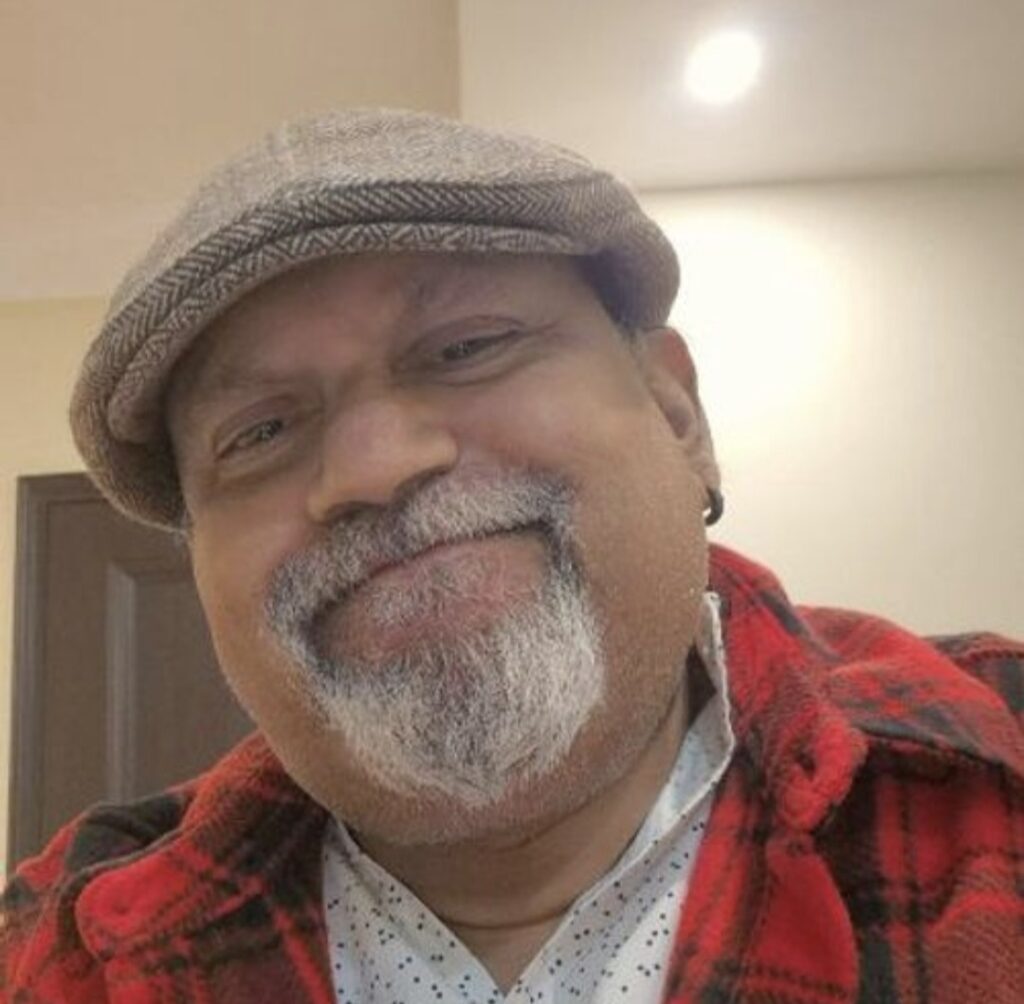
Navin Vasudev
This blog post represents the opinions of the author. The Groningen Declaration network assumes no responsibility or liability for the content or accuracy of this post.