Ten years ago, Herman de Leeuw, the first executive director of the Groningen Declaration Network (GDN) and the driving force behind the idea of the network itself, invited me to speak at the GDN conference in Cape Town. I talked about digitizing cross-border enrolment verification, making international study easier for students and less cumbersome for the institutions that serve them. Last week, I returned to the same city, this time as the network’s immediate past president.
I left high school without finishing. For a long time, I treated that as a fact about me, something to explain, work around. It took me years to understand that it said as much about the system I was measured by as it did about me.
What carried me from there to here was not a single credential. It was years of learning: courses, jobs, mistakes, and people who decided to give me a chance. Teachers who weren’t my teachers. Colleagues who took the time to show me things no one had asked them to show me. A community that vouched for me before any paper could.
And my employer. I have worked at DUO since 2002, and it did more than give me a job. It helped me find my direction and enabled me to study law, so that in 2015 I earned the degree I had long assumed was out of reach. The qualification mattered, but I would never have obtained it without the people who first recognized what I could do.
In Cape Town last week, I found myself looking back on that journey through the lens of the conference theme, Ubuntu: “I am, because we are.” It is an idea that captures something I have experienced throughout my life, even before I had a name for it.
A question I have carried for years
The day before the Annual Meeting began, a small group gathered at the Cape Peninsula University of Technology for a pre-conference event called Decolonizing Recognition: Ubuntu, Stronger Together. It opened with three questions: What do we recognize? Who gets to recognize? And whose knowledge is valued?
I have asked myself versions of those questions for years, often while filling in a job application. What happens when someone has the skills to do a job but lacks the qualification an application form asks for? How do we recognize what someone has learned at work, from colleagues, or through experience over many years?
The systems we use to decide whose learning counts tend to favour what can be standardized and credited to an individual. They are less good at recognizing knowledge acquired outside formal education, or the things a community knows about a person that no certificate can capture.
That was my situation. It is also the situation of millions of people who learn outside the classroom.
Formal qualifications remain important. They provide evidence of learning and help institutions make decisions they can justify. But they cannot tell the whole story of what a person knows or can do. The challenge is to recognize other forms of learning without losing the reliability and trust that formal qualifications are meant to provide.
From discussion to a practical idea
On the last morning of the conference, I was asked to be the recorder of a workshop on workforce skills recognition, moderated by Charmaine Hack and Jodi Tavares.
Each table was asked to identify one practical initiative that the GDN community could advance over the next two years. Our group proposed a global competency record: a portable, verifiable record of what a person can actually do, starting with nursing.
The case for nursing is easy to make. Demand for care workers is growing as populations age, and significant workforce gaps are expected by 2030. Meanwhile, a nurse moving across a border can face lengthy and expensive recognition processes before being allowed to practice. Their qualifications may be difficult to verify, and their experience and additional skills may not be fully reflected in the documents they present.
A global competency record could help make that information easier to assess and share. But the workshop raised a more fundamental question: how do you capture learning that happened outside formal education in a way that others can trust?
As recorder, my job was to listen to what the room was really saying. One observation stayed with me: a diploma does not show the difference between a gift for bedside manner and a gift for operations.
I thought: no, and the lack of one doesn’t either.
The point is not that qualifications are unimportant. In healthcare, they are essential. Patient safety depends on knowing that practitioners have the necessary training and competence. But there is a difference between establishing that someone meets the required standards and capturing everything that person knows and can contribute.
That is where the idea of a global competency record becomes interesting. It could help make skills visible across borders, including skills acquired outside formal education, without attempting to replace existing accreditation systems.
Where Ubuntu does the work
Three ideas from the workshop stood out to me, and each connects in some way to Ubuntu.
The first is that recognition is relational. A skill becomes recognized, and useful, through the people who vouch for it: an employer, a colleague, an educational institution or a regulator. The group agreed that assessing competence locally is something organizations already do. The harder part is making the evidence trustworthy enough to be accepted elsewhere.
That takes more than a database. It requires a network of people and organizations willing to verify information and rely on one another’s assessments.
The second idea is that strength comes from connection, not uniformity. Our group did not want to redefine nursing, since accreditation bodies already establish the relevant standards. Instead, a competency record should capture those competencies, show the different ways people demonstrate them, and respect regional differences.
The challenge is to make information comparable enough to be useful across borders without imposing one standard on everyone. Different systems need to be able to understand one another, even when they do not work in exactly the same way.
The third idea concerns the person’s dignity and control over their own record. We discussed allowing individuals to maintain and share their competency records when applying for a visa, looking for a job or seeking a promotion, while ensuring that verified information cannot simply be altered.
This could give people more control over how they present their skills and experience. Rather than having their knowledge assessed only through documents collected by institutions, they could carry evidence of their competencies with them and decide when to share it.
The group was also clear about the risks. Fraud is a real concern, particularly where prior learning is recognized and diplomas can be issued without genuine competence. Some skills expire and need revalidation. Language ability matters in healthcare, but it is not the same as professional competence.
These are not minor details to be resolved later. They are central to whether a global competency record will be trusted. The work is still at an early stage, and we need to be honest about that.
What I took home
My skills were real long before they were formally recognized. They became recognized because people chose to see them and give me opportunities to develop them.
DUO was one of those people, in the form of an employer that backed my studies. Herman de Leeuw was another. He had built a network on the belief that learning should be recognized across borders, and he invited me to speak at it. He looked at what I could do and what I had to say, and gave me a stage.
That invitation, in this same city ten years ago, changed the course of my life. Other people in my community did the same in their own ways. I was fortunate, and that is precisely the point: luck is not a system.
Looking back, I see a connection between those two visits to Cape Town.
In 2016, my question was how to help institutions verify a student’s enrolment without drowning in paperwork. It was a practical problem about getting information to move reliably between organizations.
In 2026, the question has grown: how do we help people demonstrate what they know and what they can do, wherever and however they acquired those skills?
The connection seems obvious now, but it took me ten years, and a room full of people who approached the issue from different perspectives, to appreciate how much the two questions have in common. The first was about verifying where someone studied. The second is about recognizing what someone can do.
Both depend on information being understood and trusted beyond the place where it originated. And both require us to look beyond the boundaries of individual institutions.
My own experience has also changed how I think about recognition. I used to focus mainly on the work I had done and the qualifications I eventually obtained. I now see more clearly how much depended on people who were willing to look beyond the obvious and give me an opportunity.
A global competency record cannot replace that human act of recognition. It cannot make every decision fair or eliminate the need for professional judgement. But it could help evidence of a person’s skills travel further than the immediate circle of people who know them.
That matters for the nurse seeking work in another country. It matters for someone whose learning has come through years of work rather than a conventional educational route. And it matters for employers and institutions that need reliable ways of understanding what people can contribute.
Recognition begins with seeing what another person knows and has learned. It also requires us to value that knowledge, even when it does not come with a familiar qualification. And sometimes it means doing something about it: opening a door, offering an opportunity or making the path easier for the next person.
That is what a global competency record could be at its best. It would make skills and experience more visible and portable, helping recognition extend beyond individual goodwill without losing sight of the people behind the records.
I came to Cape Town ten years ago because someone gave me an opportunity to contribute. Because someone saw me and moved me. This year, I came to help move a network forward, and I went home reminded of the people who moved me. I am, because they were. And if we get this right, someone else will be able to say the same, because we were.
About the Author
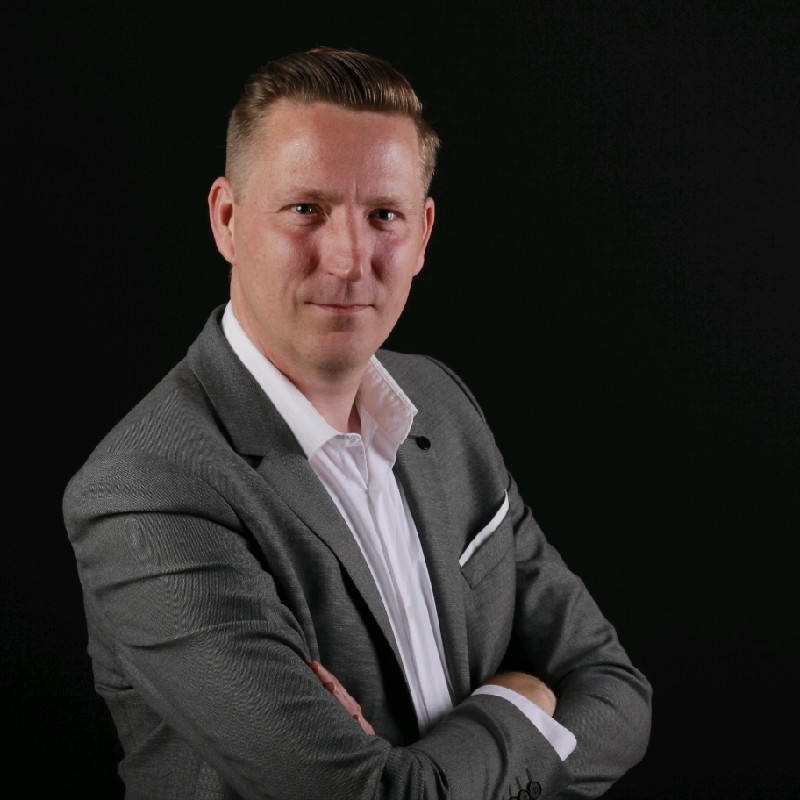
Jelger de Boer
This blog post represents the opinions of the author. The Groningen Declaration network assumes no responsibility or liability for the content or accuracy of this post.
Join the Learner and Citizen Mobility Community
Collaborate with leading international organizations and thought leaders shaping the ethical, standards-based future of secure student and worker data portability.