
“Working together is easier said than done.” Julie Reddy, Board Member of the Groningen Declaration Network and Professor of Practice at the University of Johannesburg, said this during our two days in Manchester, and it stayed with me. It captures both the promise and the difficulty of what the Groningen Declaration Network is trying to do. I had the pleasure of being invited to take part in Skills Without Limits: Developing the Future Skills Ecosystem at Manchester Metropolitan University, which brought together close to fifty participants. Across the discussions one point kept coming back. The technology to make skills visible, portable and trusted already exists. What is harder is the coordination and the trust that have to sit underneath it, and the politics that shape both.
I was invited to close the first day in a roundtable with Joanne Duklas, Executive Director of the GDN, sharing a perspective on the UNESCO Global Convention on the Recognition of Qualifications concerning Higher Education and connecting it to the questions the GDN community is wrestling with. What struck me was how naturally the threads converged. The Global Convention rests on a simple but powerful idea, that recognition flows from trust, and that trust is built through quality and transparency. As skills ecosystems become more digital and more mobile, that same logic underpins the portability and verification work the GDN drives forward.
The GDN occupies a distinctive place in this landscape. It is an international non-profit focused on making Digital Student Data Portability a reality, advocating for the right of citizens everywhere to securely consult and share their authentic educational and professional records whenever and wherever they need them. That mission brought a genuinely global community to Manchester, with voices from every continent. Sitting in that room, you sense both how far the field has come and how much still rests on the choices we make now.
A few themes ran through almost every session. The first was the sheer momentum behind digital credentials. Open badges, micro-credentials and open recognition are no longer experiments at the margins. They are reshaping how learning gets described and exchanged, and they raise hard questions about interoperability that we cannot keep putting off. The second was the shift from qualifications towards skills. Employers want to know what a person can do today. Learning outcomes, qualifications frameworks and standard skills classifications are what allow a skill to mean the same thing across borders and across systems.
The third theme, and for me the most important, was trust. Privacy, verification and fraud came up again and again. None of the portability we want is worth much if individuals are not in control of their own credentials, and if the receiving side cannot verify that a record is authentic. This is exactly where the recognition community and the data portability community need each other. Recognition is what gives a credential its meaning, and portability and verification are what give it reach. One without the other does not get you very far.
There was also a healthy realism running through the conversations. We talked about demography and the competition for talent, about a skills agenda shaped by politics and by cycles of investment and disinvestment. We talked about recognition of prior learning, about co-developing curricula with industry, about building development pathways together with small and medium-sized enterprises. AI sat in the background of much of this, both as a tool and as a challenge to how we assure quality. None of these are purely technical questions. They are questions about coalitions, about who is willing to commit, and about whether systems built in different places can be made to speak to one another.
Which brings me back to Julie’s words. The meeting did not pretend that interoperability and trust come for free. They take patient work and shared standards, and a willingness to keep talking across sectors that do not always share a language. What the GDN does well is hold that space open, so that both private and government providers of services in this field can meet as equals and get on with the practical work.
I left Manchester encouraged. The ambition behind Skills Without Limits is the right one, and the appetite in the room was real. Upskilling, learning mobility and open recognition will only deliver on their promise if we keep building the coalitions that make them trustworthy. That is slow work, and as Julie said, it is easier said than done. But on the evidence of these two days, it is work this community is willing to do.
My thanks to Melanie Gottlieb, President of the GDN, and to Joanne Duklas, Executive Director of the GDN, and to the wider GDN team for hosting. Thanks too to Manchester Metropolitan University and to Prospects HEDD for sponsoring the meeting, and to everyone I spoke with for the energy and openness of the conversations.
About the Author
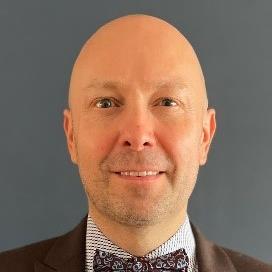
Stig Arne Skjerven
This blog post represents the opinions of the author. The Groningen Declaration network assumes no responsibility or liability for the content or accuracy of this post.